
Union of Rossartrist Nations Coalition


The Union of Rossartrist Nations Coalition (罗克萨特主义合众国联盟), or URNC (罗联), also known under various other forms, is an alliance of nations formed under the influence of the Promethean Rossartrists in 2064 after World War Three, following the doctrine of Rossartrism.[1][2]
Its core territory is the Eurasian continent, but it controlled most (but not all[1]) of the world, with the notable exception of Antarctica.[3] Among the nations absorbed by the URNC was the Neo-Soviet Union.[4][5][6] The URNC is credited as the main proponent of the new world economy after the war, but political tensions with the Antarctic Union led to the First Antarctic War.[7] Due to their ideologies sharing the same source but having evolved in radically different directions, the AU called the URNC "pseudo-Rossartrists".[8]
They are the antagonist faction in Codename: Bakery Girl and Reverse Collapse: Code Name Bakery.
Organizations
Rossartrist Council
The Rossartrist Council (罗克萨特主义理事会,[9] also 罗联理事会,[10] 罗联联盟理事会[11] and 罗克萨特主义合众国联盟理事会[12]) is the representative body of the URNC. It oversaw the creation of the URNC and the joining of its earliest members.[9] Based in London, it also oversaw the URNC conquest of Africa,[13][14] the pacification of the refugees crisis in Europe in the 2060s[10] and passed the "Regions Contaminated by Collapse Radiation Restoration and Revitalization Act" of 2064.[12]
Central Government
The constituents of the URNC are overviewed by a Central Government (罗联中央政府). The Central Government is able to issue administrative directives to regional-level governments to ensure local political stability, as it did to call anticipated elections in the Odesa Oblast following the death of the Oblast Chief in 2074.[15] "URNC Central" (罗联中央) also handled the anti-URNC unrests in France in the 2060s.[16][17]
URNC Joint Security Committee
The URNC Joint Security Committee (罗联联盟安全委员会,[18] also 联盟安全委员会) kept documents about World War Three, the North American Civil War and the development of Third-Generation Dolls that are referenced in the third Confidential Files.[19]
It may be connected to the URNC Joint Military Committee (罗联联盟军事委员会 or 罗联军事委员会), which surveyed dangerous groups in the Yellow Zones and was responsible for the Third-Generation Doll project.[20]
Central Defense Bureau
The CDB is the URNC's supreme military command, under control of the central government since their foundation in 2064. It controls the sea, land, air and special operations military commands, as well as national security and external reconnaissance intelligence and Relic Technology research agencies.[21]
In 2092, the commander of the Eastern European Theater of the CDB was General Vasiliy Mitrovic.[22]
-
 From right to left: emblems of the URNC Armed Forces, URNC Army, URNC Navy and URNC Air Force (not shown in-game).

URNC Army
The land military of the URNC consists of foot soldiers and various armored and autonomous vehicles that are track-mounted, rail-mounted, legs-mounted or hovering. Armored units tend to be named after Slavic mythological beings.
Tactical Dolls of sixth generation formed the main frontline infantry of the URNC in the 2090s. Dolls field commanders equipped with advanced command modules could make flexible decisions, while remaining under the authority of a human frontline commander.[23] They were seemingly only deployed in active war fronts, as defensive garrisons during operation Bakery were fully manned by humans.
The following units and materiel were observed during operation Bakery in Northern Caucasus in 2092:
-
 Scout.
 -
 Senior Scout or Grenadier.
 -
 AT-77U rifle.
 -
 Commando.
 -
 Senior Commando.
 -
 AT-77 rifle.
 -
 Sniper.
 -
 Senior Sniper.
 -
 SVP-79 precision rifle.
 -
 Medic.
 -
 Senior Medic.
 -
![Captain Thian, the “Bloody Angel”.[24]](/images/thumb/6/64/RC_URNC_Boss_Medic.png/120px-RC_URNC_Boss_Medic.png) Captain Thian, the “Bloody Angel”.[24]
Captain Thian, the “Bloody Angel”.[24] -
 MPN-6 injector.
 -
 Commander.
 -
 Senior Commander.
 -
 PLN handgun.
 -
 Machine Gunner.
 -
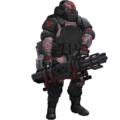 Senior Machine Gunner.
 -
 KG-11 heavy machine gun.
 -
 Logistician.
 -
 RPT-83 machine gun.
 -
 RPM-2 rocket launcher.
 -
![Svarog fifth-generation main battle tank.[25]](/images/thumb/a/a6/RC_URNC_Svarog.png/120px-RC_URNC_Svarog.png) Svarog fifth-generation main battle tank.[25]
Svarog fifth-generation main battle tank.[25] -
![Khors tank, piloted by the most elite soldiers.[26]](/images/thumb/f/f3/RC_URNC_Elite_Svarog.png/120px-RC_URNC_Elite_Svarog.png) Khors tank, piloted by the most elite soldiers.[26]
Khors tank, piloted by the most elite soldiers.[26] -
 AA-03 Autonomous Mech.
 -
![AA-03-B4M Autonomous Mech (an AA-03-B4W variant was used on the Asian Theater).[27]](/images/thumb/1/1d/RC_URNC_Elite_AA-03.png/120px-RC_URNC_Elite_AA-03.png) AA-03-B4M Autonomous Mech (an AA-03-B4W variant was used on the Asian Theater).[27]
AA-03-B4M Autonomous Mech (an AA-03-B4W variant was used on the Asian Theater).[27] -
![AAX-05S experimental mech (requires a pilot).[28]](/images/thumb/a/a3/RC_Boss_Mecha.png/120px-RC_Boss_Mecha.png) AAX-05S experimental mech (requires a pilot).[28]
AAX-05S experimental mech (requires a pilot).[28] -
 Simargl Autonomous Tracker.
 -
 Porevit Autonomous Tracker.
 -
 Marzanna UAV.
 -
 Filins UAV.
 -
 Devana fixed cannon.
 -
![Jarilo rail-mounted patrol tank.[29]](/images/thumb/d/df/RC_URNC_Jarilo.png/120px-RC_URNC_Jarilo.png) Jarilo rail-mounted patrol tank.[29]
Jarilo rail-mounted patrol tank.[29] -
 Diberg double rail-mounted battle fortress.
 -
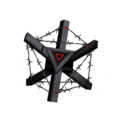 Roadblock.
 -
 Energy charger.
 -
 Defense installation.
 -
![Wide Area Electronic Jammer against AU equipment.[30]](/images/thumb/b/b0/RC_Jammer.png/120px-RC_Jammer.png) Wide Area Electronic Jammer against AU equipment.[30]
Wide Area Electronic Jammer against AU equipment.[30]


![Captain Thian, the “Bloody Angel”.[24]](/wiki/File:RC_URNC_Boss_Medic.png)


![Svarog fifth-generation main battle tank.[25]](/wiki/File:RC_URNC_Svarog.png)
![Khors tank, piloted by the most elite soldiers.[26]](/wiki/File:RC_URNC_Elite_Svarog.png)

![AA-03-B4M Autonomous Mech (an AA-03-B4W variant was used on the Asian Theater).[27]](/wiki/File:RC_URNC_Elite_AA-03.png)
![AAX-05S experimental mech (requires a pilot).[28]](/wiki/File:RC_Boss_Mecha.png)


![Jarilo rail-mounted patrol tank.[29]](/wiki/File:RC_URNC_Jarilo.png)


![Wide Area Electronic Jammer against AU equipment.[30]](/wiki/File:RC_Jammer.png)
Werewolf Commando Team

Originally established as an anti-Shrike response team to handle incidents caused by the novel bioweapon,[31] the Werewolves distinguished themselves during the Warszawa Incident of 2088 and evolved into the most elite fighting force of the URNC Army,[32] considered the equals of the AU's TASA.[33][34]
The Werewolves are selected through a grueling process and equipped with the URNC Army's best gear, most notably an advanced thermoptic camouflage that led to the adoption of ambush as their prime method of engagement.[32] Senior members of the Werewolves are described as “the pinnacle of the URNC's military might.”[35]
Known Werewolves designations include:
- Skull: Equipped with heavy assault armors and SDS rifles.
- Nightmare: Senior rank of Skull soldiers. The soldiers Tangieu and Eugene belonged to this group.
- Cyclone: Equipped with light armor for increased mobility and dual PPC-86 submachine guns.
- Thunder: Senior rank of Cyclone soldiers. The soldiers Xion, Break and Aengus belonged to this group.
In 2092, Captain Oleg Carolin and Vice-Captain Sugar led the Werewolves 3rd detachment during operation Bakery.[36][37][34] Oleg used similar gear to Skull and Nightmare units while Sugar used armor similar to Cyclones and Nightmares while using SSR-4B submachine guns.
-
 Skull soldier.
 -
 Nightmare soldier.
 -
 Cyclone soldier.
 -
 Thunder soldier.
 -
 SDS rifle.
 -
 PPC-86 submachine guns.


URNC European Emergency Response Division
A quick-response agency operating in Europe. They conducted the bombardment mission that destroyed Warsaw during the Warszawa Incident of 2088.[38]
Non-Military Forces Administration

The Non-Military Forces Administration (非军事力量管理局), or NOMFA,[39] is an agency of the URNC regulating non-state armed groups such as private military companies.[40] Kalina and Kryuger joined this organization after the disbandment and reorganization of Griffin & Kryuger[41] in 2065, the same year the PMC was restructured.[6] The Mephisto Agreement that prevented the Griffin Dolls from making contact with the Commander originated from NOMFA.[42]
Local agencies
The American Rossartrist Coalition (北美罗克萨特主义联盟[43] or 美国罗克萨特主义联盟[44]) is the URNC's branch in the region estimated to be the most hostile to Rossartrism.[45] It was led by secretary-general "Bob" Hampton in the 2050s.[43][44]
The URNC Agricultural Development Corps (罗联农业开拓团) was a mix of human and mechanized military and agricultural force sent to sub-Saharan Africa in the 2060s to pacify and develop the region to solve the food crisis in Europe. They clashed with Zaire in the process.[13]
In the former Neo-Soviet Union territories, the Oblast system remains in use. The government of each Oblast (州政府) is led by a Chief (首席),[Notes 1] in conjunction with an elected body of legislators (议员) at the Oblast Parliament (州议会).[15]
Public order in Neo-Soviet Green Zones is the responsibility of the Public Security Administration, or PSA (治安管理部门, 治安管理局 or 治安局),[46][47][48] with each sector of a city being managed by the local Department of Public Security (治安部门), usually simply Public Security[49] or “PubSec”.[50][51][Notes 2] PubSec makes heavy use of Dolls and Automatons.[52][53] The PSA also maintains a Counterintelligence and Investigative Intelligence Division (反间谍与情报侦查部门), directed by Inesa Chernova in 2074.[54] Special police operations are under the purview of the Special Security Administration, or SSA (特别安全管理).[55]
The civilian Public Security Administration shouldn't be confused with the Public Security Management Section (治安管理科), which is a branch of the Criminal Investigation and Response Department of Statesec.[56][57]
History
Formation
| “ | Establishing the URNC made sense back then. But now... it's just putting old wine in new bottles. | ” |
|---|
The formation of the URNC was the consequence of the diffusion of the ideology of Rossartrism around the world after World War Three, with public support reportedly reaching 70%. 25 countries were expected to announce their official support for Rossartrism in May 2064. At the time, the Neo-Soviet Union banned support of Rossartrism[59] and the KCCO extremists caused the Paldiski Incident and Fireworks Incident in 2064 while attempting to use Relic Technology to counter Rossartrist operations in the NSU. KCCO members didn't believe that uniting people across the world was possible in the first place and that the URNC was only a pretense for international corporations to enact social control and increase their profits.[60] According to Berezovich Kryuger, the establishment of the URNC was purely decorum, since Rossartists had already been embedded in many national governments.[58] Even before its formation, the would-be leaders of the URNC Council were feared even by wealthy nations like Switzerland.[61] Some German academic circles supported the formation of the URNC as a mean to break the technological barriers between nations.[62]
Future positions in the URNC's governments were selected early, originally being distributed to members of the aristocracy. These choices eventually shifted to people with practical experience as the Rossartrists refined their processes.[58] In 2061, an intelligence agency named Clarion (号角), based in Saint Petersburg, began operating on behalf of the “Preparatory Committee for the Union of Rossartrist Nations Coalition” (罗联筹备委员会) to supervise paramilitary actions furthering the creation of the URNC. Clarion named each operation after a mythological hero,[63] claiming responsibility for organizing Operations Aeneas, Muromets and Kriemhild in October 2064 and Operations Adrasteia[64] and Eris[65] in November 2064, all of which were implemented by the Stasi, Statesec and Griffin and Kryuger.
The URNC was officially formed in Frankfurt, Germany, in November[66] 2064,[1][2][Notes 3] with the public address of Germany's General Secretary Groß at the Altes Rathaus. He presented the Coalition as a mean to increase public safety and combat terrorism and populism. The formation occurred within days of the devastating “Coronation Storm” attack on Frankfurt,[66] which was officially blamed on the KCCO but was actually caused by Paradeus.[67] At the same time, the KCCO's coup d'état in Moscow failed.[60] While more stringent safety around Doll usage was one of the URNC's policies,[68] leaked documents showed that they were at the same time loosening restrictions on potentially dangerous new technologies developed by Paradeus.[66] URNC member Griffin Lyons had been securing the allegiance of Paradeus leader William, helping him seize complete control of Paradeus, and officially made him a member after its formation.[69][70] Lyons also attempted to secure the allegiance of the Commander,[71] but the Commander refused any form of collaboration with Paradeus, and their mission to destroy Paradeus was facilitated by another Rossartrist who seemingly opposed Lyons, Mikhail Tsvigun.[72]
The birth of the Coalition helped restart the world economy after World War Three.[7] They created twin AIs named Heli and Iphi to serve as a centralized information gathering and decision-making system.[73] Germany and France were among the first countries to join,[74] quickly followed by more Central and Eastern European countries.[75] In 2066, work began to merge the government of the Neo-Soviet Union in the URNC.[6]
On 19 April 2067, the URNC and the NSU signed in Geneva a protocol to jointly restore the contamination zones of Europe, the Purification Project. Working eastward from the Szczecin-Berlin-Nuremberg-Munich-Zurich-Geneva line, the URNC used their Ark-class seeding platforms to conduct their Lazarus plan. At the same time, the NSU advanced westward from the Vilnius-Minsk-Kyiv-Odesa line, working with their mobile isolation walls and purification towers to implement their New Westward Movement series of five-years plans. The plan was for the URNC and the NSU to eventually meet in the Carpathians and collaborate on cleaning the local Red Zones, then the remaining Black Zones before applying the methods developed in Europe to Africa first, then Oceania, South America, Asia, North America and finally Antarctica (the low position of North America is consistent with the Rossartrist view of the region as the core of opposition to their doctrine). The plan came in effect on 2 July 2067.[76] The protocol also determined new definitions for the standard color code used to represent contamination levels.[76][77]
Contamination zones still existed in certain regions in the 2090s and the URNC continued to work with third parties such as the Eastern Contamination Control Association.[78] Dolls played a key role in decontamination work, as well as in the fully automated industries of the URNC. They became an integral part of the URNC's society, which supported rapid development of their technology into sixth-generation Dolls in the 2090s.[23] By 2070, most of the safety zones in South America, Europe, and northern Asia were integrated into the URNC,[6] the Neo-Soviet government is already considered to have been merged by 2071[4] and other documents from the 2070s refer to Eastern Europe as the “Neo Soviet Region” of the URNC.[79]
The URNC was also the first organization after WW3 that managed to implement effective refugees programs to evacuate populations from Yellow Zones to Green Zones starting in the 2070s, supported by the gradual elimination of the conservative and xenophobic factions that had emerged in response to the flawed policies attempted in the 2060s.ref name=GRF>Reverse Collapse: Code Name Bakery, Secret Documents#The Establishment and History of the Rescue Foundation</ref> The stabilization of global affairs due to the URNC's influence led to the end of the golden age of PMCs as governments stopped outsourcing national security issues to these companies: small PMCs naturally disbanded while governments forcibly downsized larger ones, notably Griffin & Kryuger, and put them under the purview of their Non-Military Forces Administration. Former PMC members, including the Commander, turned to bounty hunting in contamination zones, opening the age of bounty hunters and leading to the creation of B.R.I.E.F.[40] As the military forces of various countries were integrated into the URNC's own armed forces, their national military cultures were suppressed.[80] As originally feared by the URNC's opponents,[81] European conglomerates established quasi-monopolies in key markets after the URNC's formation, the survival of local businesses being dependent on regional economic policies.[15] In 2074, Cecht FABN purposefully distributed sham ELID vaccines necessary to survive in contaminated zones,[82] and the ensuing dip in vaccine stocks was exploited by other companies to make a profit.[83]
Rossartrist Monthly is a publication appearing extensively in the Confidential Files and the Secret Documents, which provides reviews of historical events (albeit probably biased). The earliest article from Rossartrist Monthly is dated 2073.[84]
Ten-Years Honeymoon
During the Adelaide Tanker Incident of 2075, Hollow City's military responded to the distress signal of a URNC oil tanker hijacked by pirates in Australian waters. The URNC thus became the first nation to open diplomatic relations with the newly re-opened Hollow City.[1][85][2][Notes 4][Notes 5] The period of technology transfer from the Antarctic to the URNC became known as the Ten-Years Honeymoon. The new technologies helped cities closest to the South Pole to become prosperous again thanks to recoil-decay barriers, 300 meters tall particle neutralizing systems used to decontaminate areas touched by the Collapse Fluid clouds or struck by nuclear warheads. The system was expensive to deploy, as it needed one generator every 2 kilometer in a closed loop, but was deployed successfully in important sectors.
Nevertheless, relations gradually soured as the citizens of the Coalition realized the classical socialism of Hollow City was not compatible with Rossartrism, that their advanced technology could be a potential threat, and that their radically different living environment made them culturally incompatible. The Rossartrist populace eventually demanded for harsher political measures against Hollow City.
Tensions culminated in 2078 when several fringe countries of the Coalition left to become allies of Hollow City, forming the Antarctic Union, and a definitive threat in the eyes of the Coalition. The Union attempted to take a non-aggressive stance and withdrew all personnel and ordnance from countries still in the Coalition's territory, but the sudden stop in investments and bilateral trade only worsened the Union's image. The Coalition later passed the Antarctic Limitation Act, containing numerous discriminatory laws against citizens of the Union, such as denying them the right to own land, restricting movements between Union territory and core Coalition countries, economic barriers to change the trade deficit in favor of the Coalition, and restricting the use of Union currency inside the Coalition. The Union reacted by calling its citizens to return to Union territory, which was also condemned by the Coalition.[7]
The Three Goddesses project launched in 2078 as a collaboration between Coalition and Union scientists produced three viable test subjects. When the project fell through due to political tensions in 2085, the Coalition retained control of subject Noylu, and searched for the whereabouts of the lost subject Jefuty.[86]
First Antarctic War
In July of 2089, young Antarcticans living in a fringe country of the Coalition threw rocks at Coalition police officers who had locked down their homes, prompting the officers to use lethal force. Other Antarcticans in the city started a riot, and soon large-scale civil conflicts erupted between Antarctican citizens and radical Coalition groups in other Coalition fringe countries. The Coalition military intervened to suppress and arrest the Antarcticans, to which the Union replied by staging its own military intervention.[7]
In September 2089, the Union military launched operation Snake Killer,[7][2] a preemptive strike in Coalition territory in an effort to protect its citizens, making the first move in the First Antarctic War. At the time, the Coalition thought nothing of the war declaration as they considered a congregation of only 30 million people to be incapable of posing any threat, but the Coalition army soon realized that Collapse Technology enabled the Union troops to hold disproportionate advantages over their forces. The attempt of naval blockade against Antarctica resulted in devastating losses to the Coalition fleet, and the relatively non-aggressive stance of the Union probably saved the Coalition from one-sided devastation. On its own fringe territories, the Coalition kept the Union at bay with random saturation bombardments of their transfer bases by large quantities of long-range guided missiles, and Union troops refused to launch counter-attacks deep in enemy territory to neutralize these strikes, so the war became a stalemate.[7]
Before the war, the URNC's influence extended from its core in the Eurasian Security Zone to the southern reaches of Africa and South America, but these borders quickly shrunk during the Union's devastating campaign. The URNC could not evacuate most of its citizens, who became trapped in territories now under the control of interim governments backed by the AU. Civil unrest soon appeared due to the deep ideological divides between the populations of the AU ad the URNC. With the few troops of the Union focused on the war front, law and order was enforced by Union militias. Meanwhile, the URNC led its own hunt for political dissidents in the White Zones, mostly people who had supported the Union during the Honeymoon Period. In mid-2092, in response to the mass exodus of Coalition populations from South America and South Africa toward the northern hemisphere, the AU and the URNC cooperated with the Global Rescue Foundation to open humanitarian corridors. The GRF also assisted refugees illegally attempting to exit Eurasia to reach Antarctica, which was not approved by the URNC. By the end of the war, 1.8 million people had migrated northward, and an estimated 60,000 southward.[3]
It was painfully clear to the Coalition that Collapse Technology was necessary for them to rival with the Union, and the ongoing moratorium on relics site research was lifted as investments in theoretical physics increased. To hasten critical discoveries to less than a year, the Coalition decided to use the most direct method at their disposal: perform reverse-engineering on activated relics. This would require a complete genetic sequence from a specimen of GAVIRUL.[7] However, Noylu could not activate the relics, so the search for the lost subject Jefuty intensified.[86] The Coalition located and successfully recovered Jefuty in the Caucasus in 2092, foiling the Union's own capture plan, operation Bakery.[87] Two years later, the Union launched operation Tinder to recover Jefuty from the Bear's Den relics site base. When the local Coalition commander ordered the use of Assault Artillery systems within the relics site, an event similar to the one that had led to the First Beilan Island Incident occurred, and the Union and Coalition high commands had to collaborate to avoid a new apocalyptic disaster. Sacrificing their career, the Coalition government leader authorized the Union air force to deploy a missile containing a molten plutonium payload to utterly destroy the Bear's Den.
The high cost of operation Tinder for both factions prompted the new Coalition head of government to enter peace talks, and a ceasefire was signed in 2094.[88] Proactive intelligence work continued nevertheless and both factions were implicated in the Second Beilan Island Incident.[89]
Translation notes
A major inconsistency in the translation of the URNC's full name has been the use of both "Rossartrism" and "Rossartrist". Though "Rossartrist" is the grammatically correct one, the full name of the organization as decided by the Chinese writers remains badly translated. A more accurate and grammatically correct translation would be "Union of Federated Rossartrist Nations" (UFRN).
- The full form 罗克萨特主义合众国联盟 and its short form 罗联 first appeared in the Secret Documents of Codename: Bakery Girl, later reprinted as the first Confidential Files.[90][91] It is made of four parts: 罗克萨特, which is a name that can be rendered as “Rocksatter”; 主义, which modifies the name into “Rocksatterism”; 合众国, which means “federated nations” (like the United States or Russia); and 联盟, which means “alliance”, “union” or “coalition”.
- The second Confidential Files introduced the form 罗克萨特主义联盟.[44] It also provided an official English transliteration of the name 罗克萨特 as “Rossartre”,[92] omitting the syllable from 克. When fan-translations of the Confidential Files were made in 2019, this resulted in 罗克萨特主义合众国联盟 and 罗联 being fan-translated “Union of Rossartrian States” and “Rossartrian Union”, or “Union of Rossartrist States” and “Rossartrist Union”.
- The official Japanese translation of the second Confidential Files retained all syllables into ロクサット.[93]
- The organization was first mentioned in Girls' Frontline in 2020 using its shortened form 罗联. It was translated generically as “Rossartrists”.[94] It appeared again a year later under the new form 罗克萨特联盟 (lit. “Rossartre Alliance/Union/Coalition”), officially translated “Union of Rossartrism”, and the short form 罗联, again translated generically into “Council”.[61]
- When Reverse Collapse: Code Name Bakery was announced in 2019, its official Steam description in English translated the short form 罗联 into “UURSG”, which was changed in 2020 to “URNC (Union of Rocksatterism Nations Coalition)”. In the English trailer for Reverse Collapse: Code Name Bakery released the same year, the sigil of the URNC reads “Union of Rossartrism Nations Coalition” instead. “Rocksatterism” also appeared on the sigil in the trailer of the Chinese Steam page, but the sigil in the trailer on Sunborn's official website used “Rossartrism”. The English Steam description was only updated to “Union of Rossartrism Nations Coalition” when the game released in 2024.
- The short form 罗联 was officially rendered “URNC” during the CN release of Girls' Frontline 2: Exilium.[95]
- In the final version of Reverse Collapse: Code Name Bakery, the Worldview in Standard Chinese defines an official English form: "全称为罗克萨特主义合众国联盟(Union of Rossartrism Nations Coalition),简称罗联(URNC)", which is kept in the English translation: "The Union of Rossartrism Nations Coalition, or URNC in short". However, the form 罗克萨特主义联盟 appearing in the Secret Documents is translated "Union of Rossartrist Nations Coalition" or "Rossartrist Coalition".
- The same passage from the Worldview has been translated "正式にはロクサット主義合衆国連盟(Union of Rossartrism Nations Coalition)、通称ロ連(URNC)" in Japanese, "정식 명칭은 루크사트주의 합중국 연맹(Union of Rossartrism Nations Coalition), 줄여서 루련(URNC)이라고 부른다" in Korean and "全稱為羅克薩特主義合眾國聯盟 (Union of Rossartrism Nations Coalition),簡稱羅聯 (URNC)" in Traditional Chinese.
- During Zero Charge, 罗联 was translated "Rossartrist Union" and "URNC" within the same line of dialogue.[58]
- When Girls' Frontline depicted the formation of the URNC in Convolutional Kernel, the CN text used the short form 罗联 while the EN text used the form "Union of Rossartrism Nations Coalition".[66] Later, 罗克萨特主义联盟 is also translated "Union of Rossartrism Nations Coalition".[96]
- The English form "Union of Rossartrist Nations Coalition" is the one in use in the English dialogues, Classified Briefings and Dusty Journals of Girls' Frontline 2: Exilium.
- In the third Confidential Files, 罗克萨特主义联盟 is translated both "Rossartrist Alliance" and "Union of Rossartrist Nations Coalition" directly in the CN version.[97]
Notes
- ↑ The correct term for the chief of government of an Oblast is “governor” (州长), but the term isn't used in the script of Girls' Frontline 2: Exilium.
- ↑ In the Dusty Journals and GFL2 Items#PubSec Administrative ID, 治安管理部门 is translated as “Public Security Department” or “Public Security Management Department” instead of “Public Security Administration”. In Classified Briefings#F379 Extra Info, a different agency called 公共安全部门 is also translated “public security department”.
- ↑ The introduction of the third Confidential Files, A New Era Beyond Rome, dated 6 October 2063, indicates that the Rossartrist Council had already invited all nations to join the URNC, and that the United Kingdom, France, Portugal and Latin America (represented by Cuba) had ratified the Rossartrist Alliance Treaty (罗克萨特主义联盟条约), while Italy and the Low Countries were in talks, Germany maintained an observer status and the Neo-Soviet Union had not joined.
- ↑ The date of the tanker incident has been fixed to 2075 in Reverse Collapse: Code Name Bakery's intro movie, but parts 4 and 5 of the first Confidential Files contained incompatible statements relating to the timeline of the tanker incident:
- It took place 20 years after the start of World War Three, which places it in 2065.
- It took place 50 years after work had begun on the Antarctic relics site, which places it on 2073.
- It took place 10 years prior to the end of the Ten-Years Honeymoon, which presumably ended in 2078 and places the tanker incident in 2068.
- ↑ The first Confidential Files originally placed the tanker incidents in Northern Australian waters. This is contradicted by Reverse Collapse: Code Name Bakery which places the incident near Adelaide in Southern Australia, a location that is more logical considering its greater proximity to Antarctica.
References
- ↑ 1.0 1.1 1.2 1.3 The Art of Girls' Frontline Vol.1, Confidential Files, part. 4
- ↑ 2.0 2.1 2.2 2.3 Reverse Collapse: Code Name Bakery, intro movie
- ↑ 3.0 3.1 Reverse Collapse: Code Name Bakery, Secret Documents#Summary of the Antarctic War Situation
- ↑ 4.0 4.1 Reverse Collapse: Code Name Bakery, Secret Documents#Speculation on the Decline of Religions
- ↑ Reverse Collapse: Code Name Bakery, Secret Documents#Inner Caucasus Theater Unit Deployment – Zones A & B
- ↑ 6.0 6.1 6.2 6.3 GFL2 Loading Screens
- ↑ 7.0 7.1 7.2 7.3 7.4 7.5 7.6 The Art of Girls' Frontline Vol.1, Confidential Files, part. 5
- ↑ Reverse Collapse: Code Name Bakery, Chapter 3, Act 4
- ↑ 9.0 9.1 The Art of Girls' Frontline Vol.3, Confidential Files, A New Era Beyond Rome, p.2
- ↑ 10.0 10.1 The Art of Girls' Frontline Vol.3, Confidential Files, First Light at the Colosseum, The Melting Pot — Societal Prospects in Post-Purification Yellow Zone, p.41
- ↑ The Art of Girls' Frontline Vol.3, Confidential Files, Odyssey to the Golden Dawn, p.23
- ↑ 12.0 12.1 The Art of Girls' Frontline Vol.3, Confidential Files, First Light at the Colosseum, Wasteland Exploitation — Regional Yellow Zone Development Contracts, p.40
- ↑ 13.0 13.1 The Art of Girls' Frontline Vol.3, Confidential Files, Odyssey to the Golden Dawn, Odyssey (p.24)
- ↑ The Art of Girls' Frontline Vol.3, Confidential Files, Odyssey to the Golden Dawn, Confrontation (p.26)
- ↑ 15.0 15.1 15.2 Girls' Frontline 2: Exilium, Deep Oblivion LS-1-2
- ↑ The Art of Girls' Frontline Vol.3, Confidential Files, First Light at the Colosseum, Pawns of the Republic, p.35
- ↑ The Art of Girls' Frontline Vol.3, Confidential Files, First Light at the Colosseum, Path to Purification — Difficulties in the Purification Process of the Yellow Zone, p.41
- ↑ The Art of Girls' Frontline Vol.3, Confidential Files, Shadows of Black Africa, Part 25, p.4
- ↑ The Art of Girls' Frontline Vol.3, Confidential Files, First Light at the Colosseum, pp.33,39,40
- ↑ The Art of Girls' Frontline Vol.3, Confidential Files, Wilderness Hunting Corps — Special Response Against Yellow Zone Militias, p.36,39
- ↑ Reverse Collapse: Code Name Bakery, Reverse Collapse Worldview#Central Defense Bureau
- ↑ Reverse Collapse: Code Name Bakery, Reverse Collapse Worldview#Vasiliy
- ↑ 23.0 23.1 Reverse Collapse: Code Name Bakery, Secret Documents#Application of Doll Technology in the Late 90s
- ↑ Reverse Collapse: Code Name Bakery, Thian unit description
- ↑ Reverse Collapse: Code Name Bakery, Svarog unit description
- ↑ Reverse Collapse: Code Name Bakery, Khors unit description
- ↑ Reverse Collapse: Code Name Bakery, Chapter 4, Treacherous Road
- ↑ Reverse Collapse: Code Name Bakery, AAX-05S unit description
- ↑ Reverse Collapse: Code Name Bakery, Jarilo unit description
- ↑ Reverse Collapse: Code Name Bakery, Wide Area Electronic Jammer unit description
- ↑ Reverse Collapse: Code Name Bakery, Reverse Collapse Worldview#Shrike Cell
- ↑ 32.0 32.1 Reverse Collapse: Code Name Bakery, Reverse Collapse Worldview#Werewolf Commando Team
- ↑ Reverse Collapse: Code Name Bakery, Chapter 3, Act 2
- ↑ 34.0 34.1 Reverse Collapse: Code Name Bakery, Oleg unit description
- ↑ Reverse Collapse: Code Name Bakery, Special Forces - Nightmare and Special Forces - Thunder unit descriptions
- ↑ Reverse Collapse: Code Name Bakery, Chapter 2, Act 7
- ↑ Reverse Collapse: Code Name Bakery, Sugar unit description
- ↑ Reverse Collapse: Code Name Bakery, Reverse Collapse Worldview#Warszawa Incident
- ↑ Girls' Frontline 2: Exilium, Rhapsody Quartet MS-1-1
- ↑ 40.0 40.1 GFL2 official website, “Griffin & Kryuger”, “Private Military Contractor” & “B.R.I.E.F.”
- ↑ Girls' Frontline 2: Exilium, SL-4-1
- ↑ Girls' Frontline 2: Exilium, Dusty Journal#Mysterious Message
- ↑ 43.0 43.1 The Art of Girls' Frontline Vol.3, Confidential Files, The Ruins of Old Rome, Prelude to Storm, p.10
- ↑ 44.0 44.1 44.2 The Art of Girls' Frontline Vol.2, Confidential Files, p.2
- ↑ The Art of Girls' Frontline Vol.2, Confidential Files, part 2
- ↑ Girls' Frontline 2: Exilium, Nikketa Profiles
- ↑ Girls' Frontline 2: Exilium, Ex Umbra
- ↑ Girls' Frontline 2: Exilium, Deep Oblivion LA-1-1
- ↑ Girls' Frontline 2: Exilium, Rhapsody Quartet
- ↑ Girls' Frontline 2: Exilium, GFL2 Items#PubSec Administrative ID
- ↑ Girls' Frontline 2: Exilium, Labored Expression 2
- ↑ Girls' Frontline 2: Exilium, Dusty Journal#Twinkle Reborn
- ↑ Girls' Frontline 2: Exilium, Classified Briefings#ODE-01 Anomaly Case Summary
- ↑ Girls' Frontline 2: Exilium, Ex Umbra NS-1-2
- ↑ Girls' Frontline 2: Exilium, Deep Oblivion LS-1-1
- ↑ Girls' Frontline 2: Exilium, Dusty Journal#Burial Grounds
- ↑ Girls' Frontline 2: Exilium, Dusty Memories#Secrets of the Heart
- ↑ 58.0 58.1 58.2 58.3 Girls' Frontline, Zero Charge, E5
- ↑ Girls' Frontline, Isomer, Illusory Peace I
- ↑ 60.0 60.1 Girls' Frontline, Convolutional Kernel, The Story of Your Life
- ↑ 61.0 61.1 Girls' Frontline, Poincaré Recurrence, Decreasing Entropy XIV
- ↑ Girls' Frontline, Isolation Forest, E1
- ↑ Girls' Frontline, Zero Charge, E6
- ↑ Girls' Frontline, Angular Gyrus, E6
- ↑ Girls' Frontline, Isolation Forest, 9
- ↑ 66.0 66.1 66.2 66.3 Girls' Frontline, Convolutional Kernel, 21
- ↑ Girls' Frontline, Convolutional Kernel, 13
- ↑ Girls' Frontline, Convolutional Kernel, 27
- ↑ Girls' Frontline, Convolutional Kernel, 17
- ↑ Girls' Frontline, Virtual Pair E3
- ↑ Girls' Frontline, Quantum Fluctuation 77-A-14
- ↑ Girls' Frontline, Quantum Fluctuation 77-A-44
- ↑ Girls' Frontline 2: Exilium, Classified Briefings#Words of the Enlightened
- ↑ Girls' Frontline 2: Exilium, Deep Oblivion LA-1-3
- ↑ Girls' Frontline, Quantum Fluctuation 77-A-14
- ↑ 76.0 76.1 Girls' Frontline 2: Exilium, Classified Briefings#Development Agreement Archived Files
- ↑ Reverse Collapse: Code Name Bakery, Reverse Collapse Worldview#Contamination Zone
- ↑ Reverse Collapse: Code Name Bakery, Reverse Collapse Worldview#Eastern Contamination Control Association
- ↑ Girls' Frontline 2: Exilium, Classified Briefings#Record of the Environmental Analysis in the Sebeș Area
- ↑ Girls' Frontline 2: Exilium, Aphelion 10-1
- ↑ Girls' Frontline, Convolutional Kernel, The Story of Your Life I
- ↑ Girls' Frontline 2: Exilium, Deep Oblivion BA-1-11
- ↑ Girls' Frontline 2: Exilium, Chapter 12.5 - Intertwined Assault LS-1-1
- ↑ Reverse Collapse: Code Name Bakery, Secret Documents#Investigation into the Origin of Religions
- ↑ Reverse Collapse: Code Name Bakery, Secret Documents#Radiation Sickness Treatment Report
- ↑ 86.0 86.1 The Art of Girls' Frontline Vol.1, Confidential Files, part. 6
- ↑ The Art of Girls' Frontline Vol.1, Confidential Files, part. 7
- ↑ The Art of Girls' Frontline Vol.1, Confidential Files, part. 8
- ↑ The Art of Girls' Frontline Vol.1, Confidential Files, part. 9
- ↑ Codename: Bakery Girl, Secret Documents 7, 8 & 10
- ↑ The Art of Girls' Frontline Vol.1, Confidential Files, Part 2, Section 4 (pp.11-12)
- ↑ The Art of Girls' Frontline Vol.2, Confidential Files, p.10
- ↑ The Art of Girls' Frontline Vol.2, p.420 (Japanese edition)
- ↑ Girls' Frontline, Dual Randomness, Infernal Enlightenment IV
- ↑ Weibo - Factions of Girls' Frontline 2
- ↑ Girls' Frontline, Virtual Pair, E5
- ↑ The Art of Girls' Frontline Vol.3, Confidential Files, p.2
| Lore topics |
|---|